
Different Methods of Shirt Printing Explained
Different Methods of Shirt Printing Explained
Shirt printing is an art form. It's a way to express creativity, promote a brand, or make a fashion statement.
But how do you go about it?
There are several methods of shirt printing, each with its own pros and cons. This guide will delve into the different types of shirt printing, from screen printing to Direct to Garment (DTG) printing, heat transfer, vinyl cutting, and sublimation printing.
Whether you're a small business owner, a fashion enthusiast, or a graphic designer, understanding these methods can help you make an informed decision.
So, let's explore the world of shirt printing and find the best way to bring your designs to life.
Welcome to "Different Methods of Shirt Printing Explained".
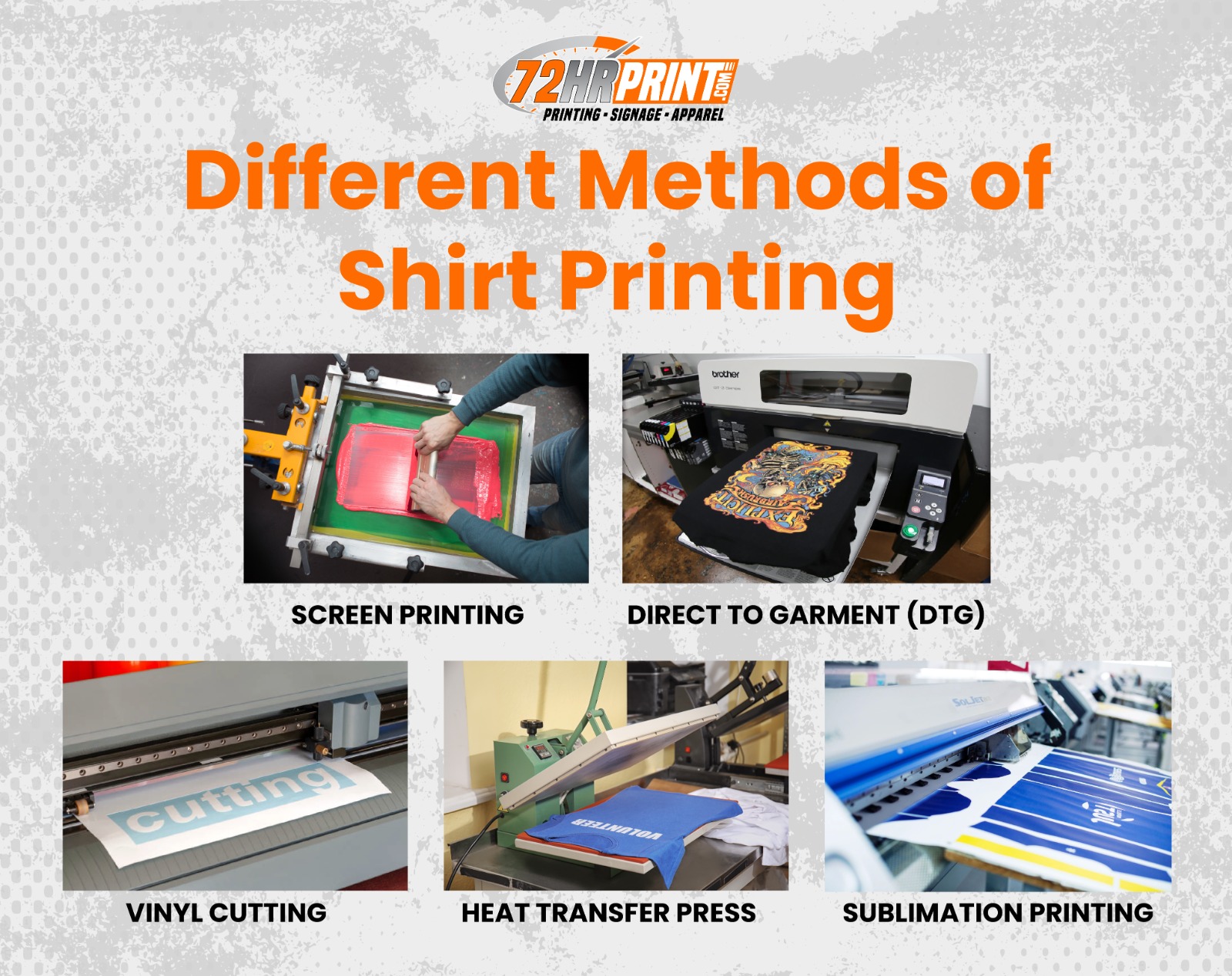
Overview of Shirt Printing Methods
Shirt printing involves various techniques, each offering unique features and benefits. These methods cater to different needs, from high-volume production to customized designs.
Key factors when choosing a method include design complexity, cost, and production speed. Screen printing, for example, excels in bulk orders, while DTG is ideal for detailed designs. Understanding these methods is essential for achieving quality prints that suit your specific requirements. Whether you're looking for vibrant colors, detailed prints, or cost efficiency, the right method can make all the difference in the final product.
Screen Printing
Screen printing is one of the oldest and most popular shirt printing methods. It's known for producing vivid, long-lasting colors on fabrics. This method uses a stencil, or "screen," to apply layers of ink onto the shirt.
This printing technique is excellent for large orders due to its efficiency once set up. However, the initial setup involves creating screens for each color, which can be labor-intensive and time-consuming. Screen printing stands out for its ability to handle thick inks, which translates into vibrant and durable designs.
While traditionally used for simpler designs with solid colors, advanced techniques allow for more complex images. This versatility has made screen printing a staple in the apparel industry. Despite its complexities, the cost-effectiveness for bulk orders has maintained its popularity.
Pros of Screen Printing
Screen printing offers several distinct advantages.
Vibrant, durable colors.
Cost-effective for high-volume orders.
Suitable for thick, opaque inks.
Cons of Screen Printing
There are certain drawbacks to consider with screen printing.
Complex setup process.
Less ideal for small, detailed designs.
Time-intensive for multi-color designs.
Direct to Garment (DTG) Printing
Direct to Garment (DTG) printing is known for its ability to produce detailed, high-resolution images. Unlike screen printing, DTG uses inkjet technology to print directly onto fabric. This method is exceptional for designs with intricate details and multiple colors.
One of the main advantages of DTG is its simplicity. There is no complex setup process, making it suitable for on-demand printing. This makes DTG ideal for small batches or custom single pieces where each print can be unique. The inks used are typically water-based, which means they are softer on the fabric compared to thicker inks.
Despite its benefits, DTG's printing speed can be a drawback for large quantities. The per-shirt cost can be higher than other methods, particularly for bulk orders. Furthermore, it performs best on cotton fabrics, which limits the types of shirts you can effectively print.
Pros of DTG Printing
DTG printing has several advantages worth noting.
Excellent for detailed, multi-color designs.
Minimal setup time needed.
Ideal for small, custom orders.
Cons of DTG Printing
However, DTG printing also has some limitations.
Slower for large quantities.
Can be expensive for big orders.
Best suited for cotton fabrics.
Heat Transfer Printing
Heat transfer printing is a versatile method that caters to different materials and design complexities. It involves transferring designs from a special kind of paper onto fabric using heat and pressure. This process is relatively simple, making it popular among beginners and DIY enthusiasts.
One of the most appealing aspects of heat transfer printing is its ability to produce vibrant designs with complex details. This method allows for easy customization, perfect for creating personalized shirts on demand. The necessary equipment is usually compact, which is advantageous for small spaces.
However, the longevity of heat transfer prints can be a concern. Over time, the designs may crack or fade, especially with frequent washing. Additionally, this method is not always the best option for bulk orders due to longer processing times for each individual shirt.
Pros of Heat Transfer Printing
Heat transfer printing offers several key advantages.
Perfect for detailed, full-color designs.
Great for small, customized orders.
Simple to learn and use.
Cons of Heat Transfer Printing
Despite its benefits, there are notable downsides.
Designs may fade or crack over time.
Not ideal for high-volume production.
Requires careful washing to prolong print life.
Vinyl Cutting
Vinyl cutting is a popular method for creating simple yet effective shirt designs. This process involves cutting out shapes from sheets of vinyl and applying them to fabric with heat. It's ideal for designs that feature bold lines and solid colors.
This technique is excellent for lettering and geometric patterns, where precision is key. Vinyl prints are known for their durability and are resistant to washing. As a result, vinyl designs maintain their vibrancy over a long period.
Despite its durability, vinyl cutting has limitations. It is not suitable for designs requiring complex color variations or intricate details. Additionally, layering multiple colors can be challenging, making it less ideal for elaborate designs.
Pros of Vinyl Cutting
Vinyl cutting provides distinct benefits.
Highly precise for letters and simple shapes.
Resilient to regular washing.
Long-lasting, vibrant results.
Cons of Vinyl Cutting
There are some drawbacks to consider.
Limited in color variety and detail.
Difficulties with multi-layer designs.
Best for less intricate graphics.
Sublimation Printing
Sublimation printing is a unique process that involves turning ink into a gas that permeates the fabric. This method is best suited for polyester or polymer-coated materials. The results are vibrant and the design becomes a part of the fabric itself.
This technique ensures that the print does not crack, fade, or peel over time. Sublimation is ideal for creating all-over prints due to its seamless integration with the material. However, it requires specific fabric types to achieve optimal results.
One of the limitations is that sublimation doesn’t work well on cotton fabrics. The initial investment in the right equipment can also be high. Despite these challenges, it provides high-quality and durable outputs.
Pros of Sublimation Printing
Sublimation offers numerous advantages:
Integrates prints seamlessly into fabrics.
Results in long-lasting, vibrant colors.
Provides durability without peeling or cracking.
Cons of Sublimation Printing
There are a few cons as well:
Limited to polyester or polymer-coated materials.
High initial equipment costs.
Not suitable for cotton fabrics.
Choosing the Best Print Method for Your Needs
Selecting the right shirt printing method is crucial. It affects the final look and durability of the design. Different projects may require different printing techniques depending on several factors.
Consider the quantity of shirts you need and the complexity of the design. For example, screen printing is cost-effective for large orders, while DTG excels at intricate designs. Also, think about the type of fabric. Some methods work better on specific materials like polyester or cotton.
Budget is another important consideration. Some methods require significant initial investment in equipment. Determine your priorities and match them to a method that offers the best balance between cost and quality.
Factors to Consider
When deciding on a shirt printing method, keep the following factors in mind:
Fabric type and material
Order size and volume
Design complexity
Equipment investment
Desired durability and longevity
Ready to Print? Choose the Perfect Method Today!
In conclusion, understanding the various types of shirt printing is essential for choosing the best method for your needs. Consider the design, quantity, and material when making your choice. Whether it's for a business venture or a personal project, selecting the right technique ensures professional results and customer satisfaction.